
The decision marks the final death of the Voting Rights Act
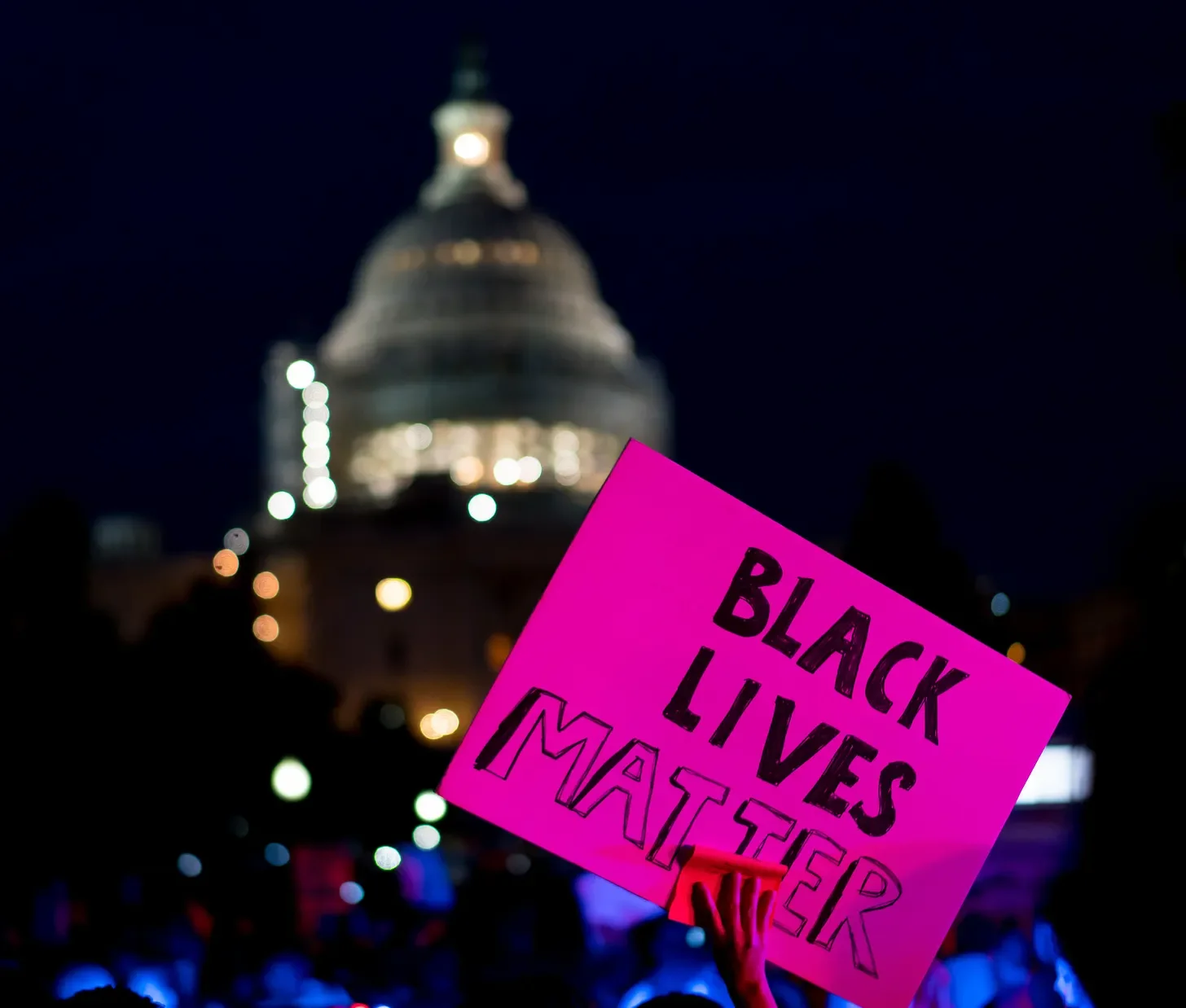
Photo by Victoria Pickering on Flickr
In a decision that sets back civil rights by more than half a century, the U.S. Supreme Court on Tuesday upheld its partial repeal of the 1965 Voting Rights Act, allowing Republican-led states to pass racially discriminatory congressional maps ahead of the 2026 midterm elections.
At the end of April, the Supreme Court ushered in a new era of racial segregation with its draconian ruling in Louisiana v. Callais, where it decided that Section 2 of the Voting Rights Act would no longer protect minority voters from redistricting.
Before the ruling, Section 2 of the civil rights era law prohibited states from using any voting procedure “that results in the denial or abridgement of the right of any citizen to vote on account of race, color, or membership in a language minority group.” This applied to the demographic balance congressional districts themselves, where minority voters were expected to given representation at least vaguely matching their population.
In Louisiana, for example, where Black voters make up roughly one-third of the electorate, the courts had ordered legislators to create maps featuring at least two majority-Black congressional districts out of the six allotted to the state. Following the Supreme Court’s decision in Callais, however, the state rushed to pass new maps that cut through and divide communities of color, making Black voters the minority of each resulting district.
While the affected communities will still technically be able to vote, the new maps all but guarantee that they will never be fairly represented in Congress.
In a conscious effort to steal the next election, several other red states are joining Louisiana to pass their own racially discriminatory maps, threatening to completely wipe out Black voting power in the American South for the first time since the civil rights era.
Providing a brief glimmer of hope, a lower court had recently blocked a similar effort in Alabama, where legislators planned to remove one of their state’s majority-Black districts. The three-judge lower court, which included two Trump appointees, offered a scathing rebuke of the state’s Louisiana-inspired gerrymander, maintaining that they could not support “a districting plan tainted by intentional race-based discrimination.”
“We do not lightly intrude in state affairs, but our previous review of the undisputed evidence left us in no doubt that Alabama’s legislatively enacted plan intentionally discriminated based on race in violation of the Constitution,” they added.
Some advocates were optimistic that this ruling, decided by a Trump-majority court, could get the Supreme Court to at least partially reconsider the disastrous precedent it set with Callais.
Nevertheless, as of Tuesday, the Supreme Court’s conservative majority decisively overturned the lower court’s ruling and will continue to allow states to turn back the clock on civil rights — clearing the way for Alabama, Louisiana, and others to disenfranchise voters based on a racial and partisan agenda.
In their dissent of the ruling, the liberal justices of the Supreme Court accused their colleagues of intentionally sowing chaos, dismantling racial equality, and incentivizing gross political gamesmanship.
Alabama “has no legitimate interest in enforcing an unconstitutional map, while vast harms will likely arise from upending the status quo, sowing chaos in Alabama, and rewarding Alabama’s gamesmanship,” Justice Sonia Sotomayor wrote. “Because I choose to defend the rule of law and the right of all Alabamians to participate equally in democracy, I respectfully dissent.”
Likewise, civil rights leaders have condemned the ruling as a direct endorsement of racial discrimination. “The Supreme Court’s decision gives cover to Alabama and others to deliberately and openly discriminate against Black voters without fear of any consequence,” warned Deuel Ross, the Director of Litigation at the Legal Defense Fund. “The Court’s shameless decision to reinstate a racially discriminatory map defies any thoughtful or consistent application of the law.”
“Alabama’s political leadership has made it absolutely clear that without protections for Black voters in place, they will not stop pursuing a congressional map that results in a delegation without Black representation,” added JaTaune Bosby Gilchrist, the Executive Director of the ACLU of Alabama. “The fight for equity and justice continues, and we will continue to show up wherever the work demands.”
Tuesday’s ruling is an unfortunate reminder that no matter what the polls say, Democrats face an uphill battle in their mission to flip the House and Senate this November. This won’t be easy — Republicans have shown us that they’re playing by an entirely separate rule book, one where they’re willing to disenfranchise entire portions of the electorate to give themselves an unfair and undeserved advantage.
In other words, their masks have finally come off.
Thankfully, no amount of partisan or racial gerrymandering can completely stop a blue wave where voters from every state turn out in record numbers to deliver a decisive verdict against the Trump administration and its racist sycophants. They’ve shown their cards; now, it’s time for us to show ours.
Vote, volunteer, donate, and get your friends and family out to the polls in November. If we don’t win big, Republicans will do everything in their power to make sure we never get another chance.
Let’s not waste what rights we still have.
For more breaking news, please follow us on Substack.
